
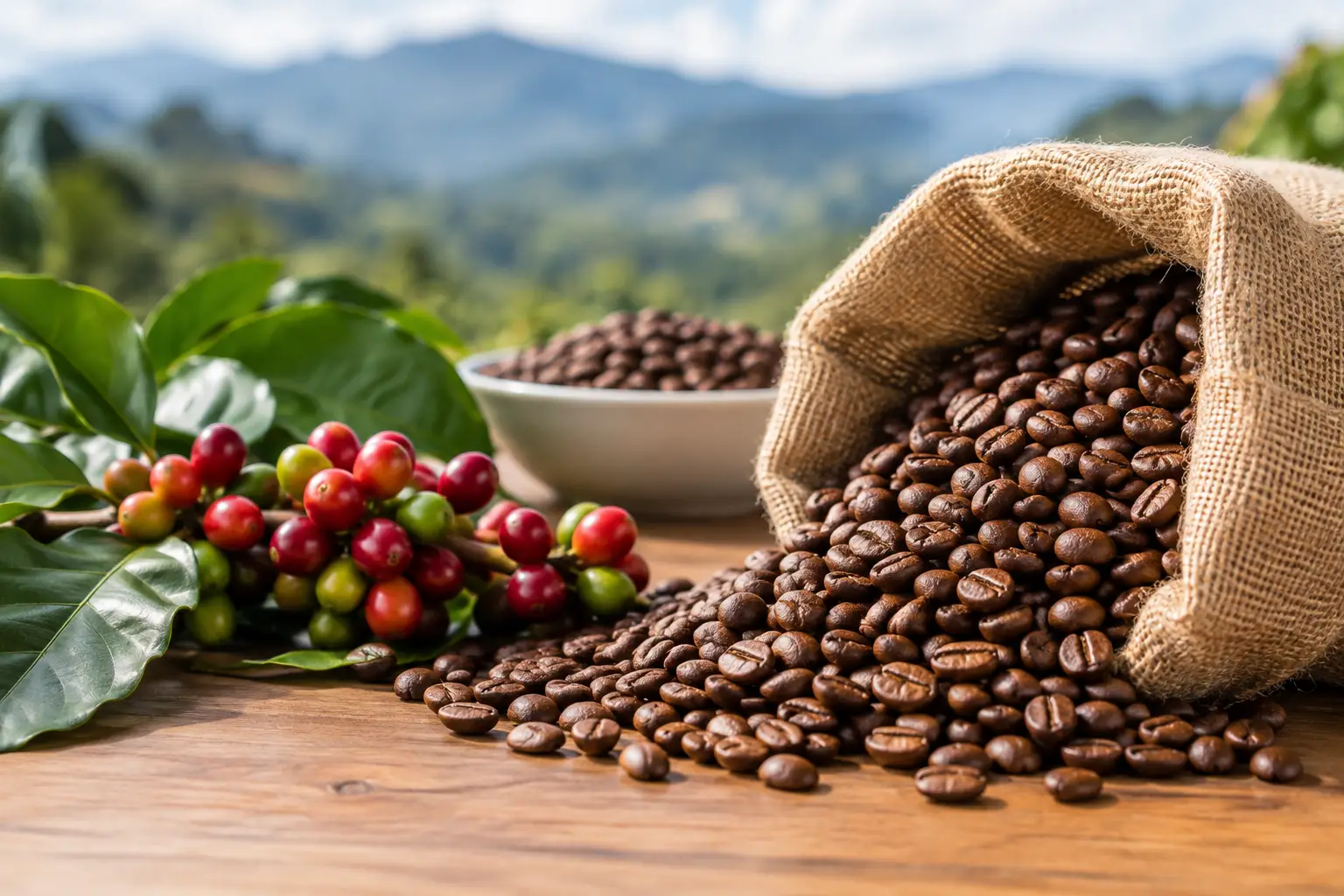
A commercial coffee program can lose margin long before the beans reach a roaster. The problem is often not a lack of Arabica supply. It is unclear specifications, inconsistent lots, delayed documents, or a supplier who cannot support repeat shipments. Knowing how to source Arabica coffee means building a supply arrangement around quality, traceability, landed cost, and dependable delivery – not simply finding the lowest quote.
For roasters, distributors, café groups, and beverage manufacturers, Brazilian Arabica offers a strong foundation for bulk purchasing. Brazil combines significant production capacity with established export infrastructure and profiles that can work well in espresso blends, filter programs, private-label products, and commercial foodservice supply.
Start With a Commercial Coffee Specification
Before requesting prices, define the product your business actually needs. “Arabica coffee beans” is too broad for an export quotation or a repeatable purchasing contract. A supplier needs enough detail to identify the right available lots, prepare an accurate offer, and manage quality expectations before shipment.
Specify whether you require green coffee, roasted beans, or a particular commercial preparation. Most importers and roasters sourcing origin coffee will purchase green beans, then roast locally for freshness and brand control. For bulk coffee buyers, details such as screen size, defect tolerance, moisture range, crop year, bean preparation, bag weight, and packaging should be agreed in writing.
Cup profile matters just as much as physical grading. A buyer developing a consistent espresso program may prioritize body, sweetness, low acidity, and dependable performance through a range of roast levels. A specialty-focused roaster may place greater value on a defined flavor profile, elevation, variety, and more selective processing. Neither approach is automatically better. The right choice depends on your customer base, price point, and production model.
It also helps to state the intended use. A high-volume café chain, for example, may benefit more from a stable, cost-controlled profile than a small microlot with seasonal variation. A distributor supplying several independent roasters may need multiple grades so its customers can buy according to their own positioning.
How to Source Arabica Coffee From Brazil
Brazil is not one uniform coffee origin. Growing areas, processing methods, harvest conditions, and lot preparation all affect the cup and commercial suitability of the beans. A practical sourcing partner should help buyers match the available product to the final application rather than pushing a generic grade.
Natural and pulped natural Arabicas are common Brazilian options. Natural coffees can contribute sweetness, heavier body, and fruit-forward notes, while pulped natural lots may offer a cleaner profile with balanced sweetness and acidity. Washed profiles may be available through select supply channels, but buyers should evaluate each lot on its own merits rather than purchasing based on process name alone.
For commercial procurement, ask the supplier to identify the origin region, preparation, current crop availability, and expected volume. Request representative samples before confirming a large order. A sample cannot guarantee every bag in a future shipment will taste identical, especially in agricultural products, but it establishes a benchmark for approval and gives your roasting or quality team a meaningful basis for evaluation.
Where volume permits, retain an approved reference sample and include the agreed quality standard in the purchase agreement. This gives both buyer and supplier a clear point of comparison if questions arise during receiving or production.
Evaluate the Supplier Beyond the Price Sheet
A low FOB price may look attractive until freight coordination, document errors, product substitutions, and claims management begin adding cost. Supplier evaluation should cover operational capability as well as the quote.
A dependable exporter should communicate clearly about availability, quality parameters, loading timelines, packaging, payment terms, and export documentation. They should also be prepared to explain how lots are selected, checked, stored, and released for shipment. Clear answers are especially valuable for buyers managing production schedules or warehouse replenishment across multiple markets.
Consider the supplier’s ability to support your preferred order size. Container purchasing can lower the per-unit logistics cost, but it requires inventory capacity and working capital. Smaller orders may be more practical for market testing, seasonal programs, or businesses with limited storage. The best arrangement balances freight efficiency against the risk of holding too much coffee while demand or green-coffee prices shift.
Ask whether the exporter can offer consistent supply across successive shipments, not just one available lot. Long-term supply relationships are built on realistic forecasts, early communication about crop changes, and an agreed process for approving substitutions when the original specification is unavailable.
Verify Quality Control and Food-Safety Requirements
Coffee is an agricultural commodity, so quality verification should be systematic. Confirm the inspection process used before loading and determine what documentation will accompany the cargo. Depending on the destination and buyer requirements, this can include commercial invoices, packing lists, certificates of origin, phytosanitary documentation where applicable, and other import-related records.
Buyers should also understand their own local regulatory obligations. Food import rules differ by country and can change by product form, destination, and intended use. An experienced exporter can provide the required shipment information, but the importer remains responsible for confirming the requirements that apply in its market.
Pre-shipment checks should address the condition of the beans and packaging. Moisture, defects, foreign matter, odor, bag integrity, and container cleanliness all deserve attention. Coffee can absorb undesirable odors and suffer quality loss when stored or transported in poor conditions. For this reason, the lowest-cost freight option is not always the best option for a premium or quality-sensitive program.
Build the Landed Cost, Not Just the Bean Price
The purchase price is only one part of the cost of sourcing Arabica coffee. Your procurement team should calculate landed cost before comparing suppliers. This includes the coffee price, inland handling where relevant, export charges, ocean or air freight, insurance, customs brokerage, duties and taxes, local delivery, financing costs, and expected warehouse handling.
Use agreed Incoterms to make responsibilities visible. FOB pricing may give an experienced importer more control over freight booking, while CIF pricing can simplify planning when the exporter arranges transport to the destination port. Neither term is universally preferable. The right choice depends on your logistics resources, freight contracts, risk tolerance, and destination experience.
Currency movements and coffee-market volatility also affect total cost. A commercially sound agreement should state the currency, payment schedule, pricing basis, and any conditions tied to market movements. If your business needs stable resale pricing, consider purchasing schedules or volume commitments that reduce exposure to sudden spot-market changes.
Plan Logistics Around Your Roast and Sales Cycle
Coffee sourcing becomes more reliable when procurement timing matches your inventory reality. Work backward from your target receiving date, allowing time for production, bagging, inland transport, port handling, vessel schedules, customs clearance, and delivery to your warehouse or roastery.
Keep a practical safety-stock level for your sales cycle and account for possible transit disruptions. The appropriate buffer depends on your usage rate, storage conditions, ability to substitute origins, and the consequences of a stockout. A busy roastery supplying wholesale accounts may need more coverage than a boutique operation that changes offerings frequently.
Packaging should also be matched to your handling process. Traditional jute bags remain common for green coffee, while liners and other protective solutions can offer added protection depending on the shipment requirements. Confirm bag weights, palletization if required, container loading plans, and labeling before the order is released.
Turn the First Order Into a Repeatable Program
The first shipment is where a supplier relationship proves its value. Document what worked: sample approval, response time, loading accuracy, document quality, transit performance, receiving results, roast performance, and customer feedback. This record makes future purchasing faster and helps both sides solve issues before they affect supply continuity.
For recurring demand, share forecasts with your supplier early. Forecasts do not need to be perfect to be useful. Even an expected quarterly volume range helps an exporter plan allocations and gives your business a better chance of securing suitable coffee when availability tightens.
Ruda Enterprise supports commercial buyers seeking Brazilian Arabica coffee with transparent communication, bulk sourcing support, quality-focused coordination, and worldwide delivery planning. The objective is not simply to move a shipment, but to help buyers maintain a dependable coffee supply that supports their own growth.
The most productive next step is to send a clear buying brief: your required grade, volume, destination, target delivery window, packaging needs, and intended application. That one document turns a general inquiry into a conversation your supplier can price, verify, and fulfill with confidence.
