
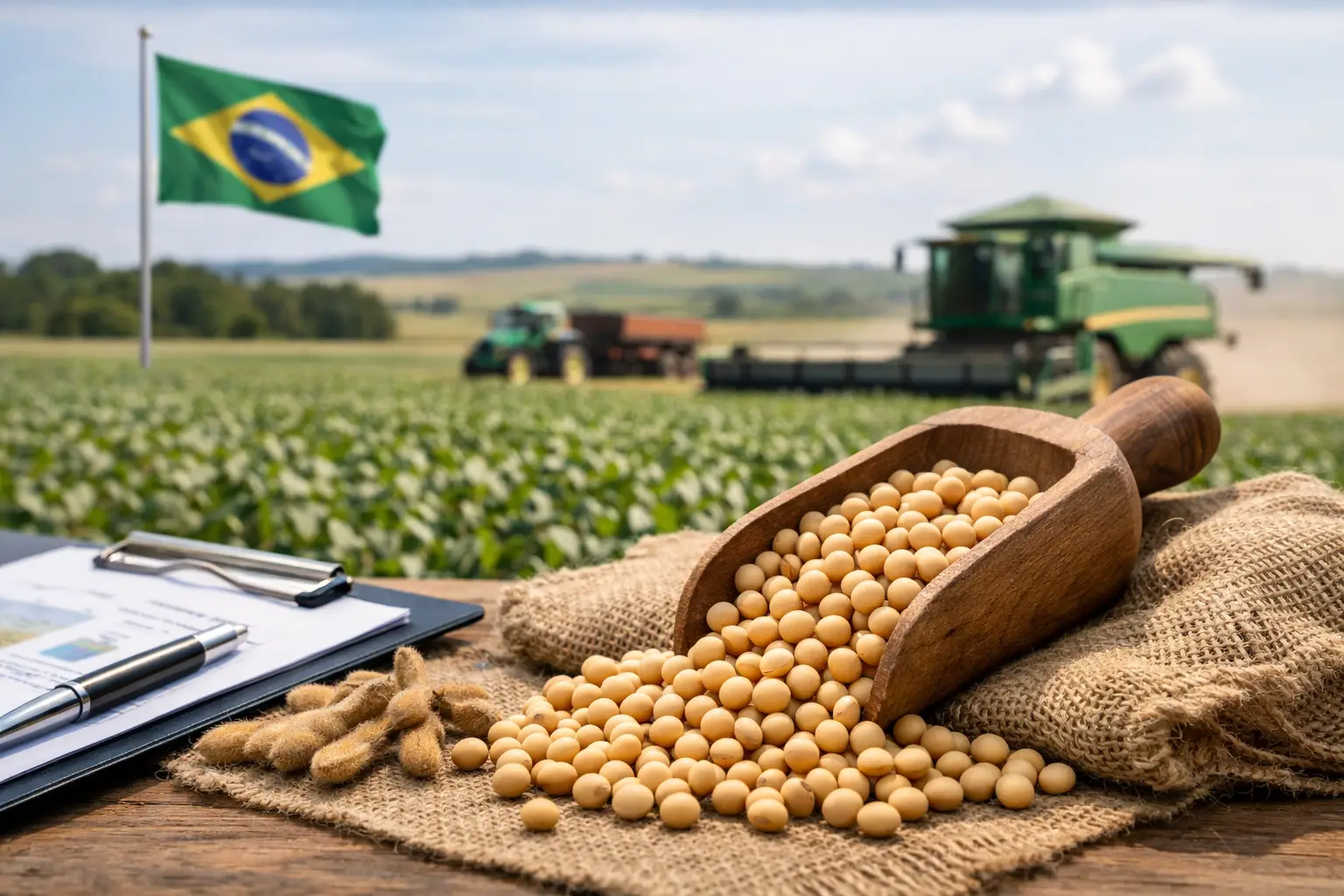
Brazilian soybean sourcing is not simply a matter of securing available volume. For importers, feed producers, food manufacturers, and commodity traders, the real requirement is a dependable supply program: verified product quality, commercially clear terms, practical shipment planning, and a supplier that remains accountable from origin through delivery.
Brazil offers substantial opportunity for buyers seeking bulk soybeans, but the market also demands careful supplier selection. Crop conditions, inland transportation, port schedules, storage practices, and destination requirements can all influence a transaction. A capable sourcing partner helps turn those variables into a controlled procurement process that supports inventory continuity and margin protection.
Why Brazil Matters in Global Soybean Procurement
Brazil is a major force in global soybean production and export, with supply reaching buyers across North America, Europe, the Middle East, Asia, and Africa. Its broad agricultural base and export infrastructure make it an important origin for companies that need large-volume purchases, recurring shipments, or an additional source alongside other producing countries.
For many commercial buyers, Brazilian soybeans offer more than scale. They provide a way to diversify origin risk, align purchases with seasonal availability, and maintain flexibility in a changing commodity market. The right buying strategy depends on the destination, end use, required specifications, and the buyer’s tolerance for price and timing exposure.
A feed manufacturer may prioritize dependable protein and oil characteristics alongside a delivery window that protects production schedules. A trader may place greater weight on market timing, port optionality, and resale economics. A food-sector buyer may need closer documentation review and specific quality controls. Brazilian soybean sourcing works best when the commercial objective is defined before an offer is requested.
Start With a Clear Soybean Purchase Specification
A purchase inquiry should give the supplier enough information to quote accurately and assess feasibility. Asking only for a price can produce an offer that looks attractive but does not match the required quality, packaging, volume, or shipping plan.
Commercial specifications commonly address the soybean grade, moisture level, foreign material, damaged kernels, harvest condition, crop year where relevant, and intended use. Buyers should also confirm whether they require non-GMO supply, identity preservation, particular inspection protocols, or destination-specific phytosanitary documentation. These requirements can affect availability, handling, lead time, and cost.
Quantity should be stated in practical terms, including whether the order is a trial shipment, a spot purchase, or part of an ongoing supply program. Packaging and load format also matter. Bulk vessel, containerized cargo, bags, and other formats each have different economics and logistics considerations. The lowest unit price is not always the lowest landed cost, especially when a format creates extra handling, storage, or clearance expenses at destination.
Match Incoterms to Your Operational Control
Incoterms define responsibility, cost allocation, and risk transfer during shipment. They should never be treated as a small line item in a soybean offer.
Some buyers prefer to control ocean freight and nominate their own carrier or forwarder. Others want the exporter to arrange a freight-inclusive shipment to simplify coordination. Neither option is automatically better. It depends on the buyer’s logistics capability, freight agreements, destination experience, and appetite for managing handoffs.
Before confirming an order, both parties should be aligned on the named port or place, loading terms, insurance responsibility where applicable, document requirements, payment structure, and the point at which risk transfers. Clear terms reduce preventable disputes and make it easier for operations teams to plan receiving, customs clearance, and inventory allocation.
Quality Control Must Continue Beyond the Initial Offer
Product quality is established through more than a written specification. It depends on how soybeans are selected, stored, sampled, inspected, loaded, and documented. Buyers should expect a transparent discussion of the controls used at each stage rather than relying on broad quality claims.
Pre-shipment inspection can provide an independent view of agreed parameters before cargo departs. Sampling methods, laboratory testing, weighing arrangements, and certificate requirements should be agreed in advance, particularly for transactions where small deviations could affect processing performance or contractual value.
Storage and loading conditions deserve attention as well. Moisture exposure, contamination risk, pest control, and handling discipline can influence cargo condition. This is especially relevant when shipment schedules change or goods spend longer than expected in warehouses or transit areas. A responsive supplier communicates early when conditions affect the planned loading schedule instead of leaving buyers to discover changes after documents are issued.
Documentation must match the cargo and the destination market. Depending on the transaction, a buyer may require commercial invoices, packing details, bills of lading, certificates of origin, phytosanitary certificates, quality certificates, fumigation documentation, or other official and carrier-issued records. Requirements vary by country and by buyer use case, so confirmation before shipment is far more efficient than document corrections after arrival.
Logistics Can Determine the Value of a Soybean Deal
Brazilian soybeans move through an extensive network of farms, storage facilities, truck and rail corridors, terminals, and ports. This depth supports global trade, but it does not eliminate operational constraints. Peak harvest movement, weather, terminal congestion, equipment availability, and vessel schedules can all affect timing.
Buyers should build reasonable delivery expectations into their procurement plan. A shipment window is more useful when it accounts for inland movement, export terminal procedures, document processing, sailing time, and possible destination delays. Procurement teams that wait until inventories are critically low have fewer options and often pay more for urgency.
For recurring demand, a forward buying plan can improve predictability. It allows the buyer and supplier to discuss volume forecasts, preferred shipment periods, acceptable alternatives, and documentation needs before a spot-market deadline creates pressure. This does not remove commodity price risk, but it can reduce avoidable supply-chain risk.
Communication is central to this process. Timely updates on cargo readiness, loading status, estimated departure, document release, and exceptions help buyers coordinate receiving teams and downstream commitments. Reliable export service is measured not only by a cargo that ships, but by how well information moves when a buyer needs to make decisions.
Assess Suppliers as Long-Term Procurement Partners
A dependable exporter should be able to explain where product is sourced, how quality is managed, what shipment formats are available, and how it handles changes during execution. Commercial confidence should be supported by clear answers, consistent documentation, and a practical understanding of international trade requirements.
Buyers also benefit from evaluating whether the supplier can support their wider sourcing needs. Consolidating appropriate categories with one export partner may reduce administrative burden, simplify supplier communication, and create better visibility across purchasing activity. That said, consolidation should not come at the expense of product expertise or quality control. The best arrangement balances convenience with proven capability in each category.
Ruda Enterprise supports businesses seeking Brazilian agricultural commodities with transparent sourcing, responsive coordination, and worldwide export capability. For soybean buyers, the focus is on building transactions around real operating requirements rather than forcing every customer into a standard arrangement.
Questions Worth Asking Before You Buy
Before awarding a soybean order, procurement teams should ask how the supplier verifies quality, which port and shipment format are proposed, what documentation is included, and how schedule changes will be communicated. They should also confirm the payment process, inspection options, tolerance terms, and who will handle key logistics responsibilities.
These questions are not signs of distrust. They are part of disciplined international purchasing. A supplier that answers them directly is better positioned to support a transaction that performs as expected.
Build Sourcing Around Continuity, Not Just Price
Soybean prices can move quickly due to weather, currency shifts, planting expectations, demand changes, and freight conditions. A competitive offer matters, but procurement decisions based only on the headline price can create higher costs later through delayed cargo, unsuitable specifications, incomplete documents, or unplanned destination handling.
The stronger approach is to compare offers on total commercial value. Consider product conformity, export readiness, freight structure, delivery reliability, documentation support, responsiveness, and the supplier’s ability to manage repeat business. This perspective helps protect operations when market conditions become less favorable.
A well-prepared soybean inquiry gives both buyer and supplier a better starting point: required volume, target specification, destination, preferred terms, timing, and any special compliance needs. With those details in place, Brazilian soybean sourcing becomes a practical way to secure quality supply and keep your business moving with greater confidence.
